
Solar Energy Solutions for Businesses in Japan
Japan’s liberalised power market and high commercial electricity prices are pushing many companies to rethink how they buy and use energy. TotalEnergies ENEOS provides solar energy solutions for businesses in Japan that help reduce electricity costs, lower carbon emissions and improve energy resilience, often without requiring upfront investment.
Japan’s Evolving Energy Market and Rising Power Costs
Japan’s energy market has undergone significant liberalisation, opening up retail competition but also exposing businesses more directly to wholesale price volatility and policy driven surcharges. Commercial and industrial electricity prices are among the highest in Asia, and many users have seen their bills increase as fuel costs rise and the renewable energy surcharge is adjusted over time.
At the same time, Japan continues to depend heavily on imported fossil fuels for power generation, which creates sensitivity to global fuel prices and currency movements. This environment puts pressure on margins for manufacturers, logistics operators, data centres and commercial facilities that need stable, predictable energy costs.
In parallel, expectations for solar PV growth remain strong under Japan’s Strategic Energy Mix Plan, with more rooftop and ground mounted projects planned across the country. For businesses, on-site solar offers a way to secure part of their electricity at a more predictable cost, reduce exposure to future tariff changes and show clear progress on decarbonisation.
National Renewable Targets and Government Incentives
Japan has committed to an ambitious 2030 energy and climate roadmap. The government’s targets include lifting the share of renewables in the power mix to around 36 to 38 percent, expanding solar PV capacity into the 100 gigawatt plus range and cutting greenhouse gas emissions by 46 percent from 2013 levels. Solar power sits at the centre of these plans, both on rooftops and in larger scale projects.
To support these goals, Japan has moved from a pure feed in tariff approach toward a more diverse set of mechanisms, including feed in premiums, corporate PPAs and schemes that encourage both on-site and off site solar adoption. Regulations and guidelines are evolving to make third party ownership models and long term solar power purchase agreements more accessible for corporate buyers.
For commercial and industrial customers, this creates a clearer pathway to adopt solar without owning all the equipment themselves. Working with partners like TotalEnergies ENEOS, businesses can tap into these frameworks through structured PPA arrangements that align with national policy and internal ESG goals.
Why Solar Makes Sense for Japanese Businesses
In Japan’s current market conditions, solar is increasingly attractive not only as a sustainability measure but also as a cost management tool. In some regions and customer segments, on-site solar has already reached grid parity or better, meaning the cost of solar electricity over the life of the system can be equal to or lower than the local grid tariff.
For businesses with significant daytime consumption, this creates a direct financial incentive to install solar on available roofs or land. Every kilowatt hour generated on-site reduces the amount of high priced grid power that needs to be purchased, while also lowering reported emissions. This is particularly valuable for export oriented manufacturers, technology companies and brands that are under strong pressure from global customers and investors to decarbonise.
By combining local market knowledge with international engineering and financing expertise, TotalEnergies ENEOS can help Japanese businesses structure solar projects that deliver both cost savings and carbon reductions, even in a context where subsidies are less central than in the past.
Commercial Solar Projects in Japan
TotalEnergies ENEOS has delivered commercial and industrial solar projects across Japan, partnering with leading brands in retail, food and beverage, and dairy manufacturing.
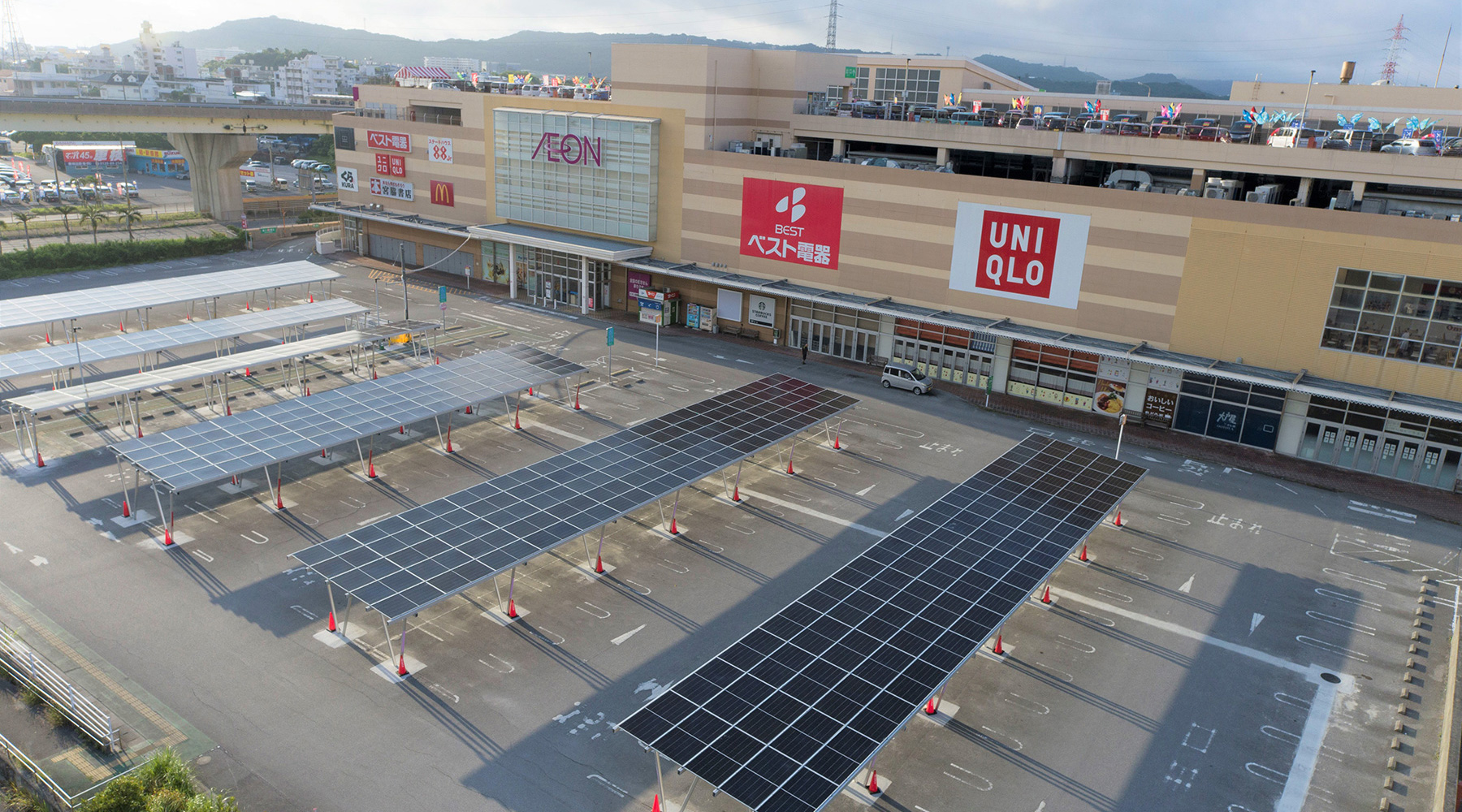
AEON RYUKYU HAEBARU, GUSHIKAWA
Capacity (DC): 341kW, 528kW
COD*: JUL 2025
LOCATION: OKINAWA
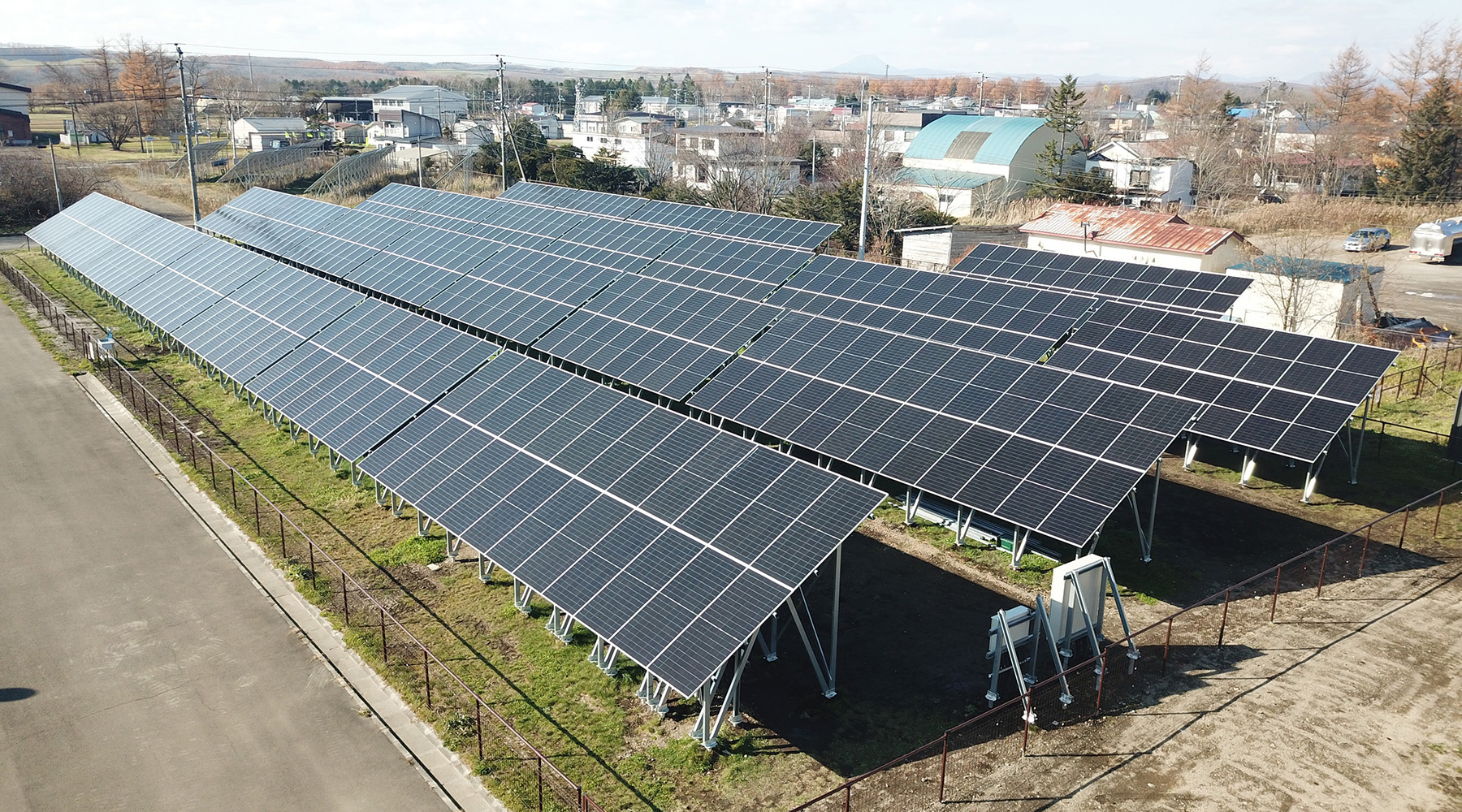
These projects reflect how Japanese businesses across retail and food manufacturing are working with TotalEnergies ENEOS to address rising energy tariffs, enhance operational reliability, and advance their sustainability agendas.
FAQ
Why are electricity prices rising for businesses in Japan?
Electricity prices for businesses in Japan are rising because the country relies heavily on imported fossil fuels, so power costs are sensitive to global fuel prices and exchange rates, and liberalisation of the power market plus adjustments to surcharges and policy costs are passed through to end users, which increases bills for commercial and industrial customers over time.
What renewable energy targets has Japan set for 2030 and 2050?
Japan’s 2030 energy and climate plan aims to raise the share of renewable energy in the power mix to around 36 to 38 percent, significantly expand installed solar PV capacity and reduce greenhouse gas emissions by 46 percent from 2013 levels, and by 2050 Japan has committed to achieving carbon neutrality, which implies a much larger role for renewables, including on-site and off site solar, in its overall energy system.
How does Japan's RE surcharge impact commercial electricity costs?
Japan’s renewable energy surcharge is added to electricity bills to recover the cost of supporting renewable generation under schemes such as feed in tariffs and feed in premiums, and when the surcharge level increases, commercial users pay more per kilowatt hour even if their consumption does not change, which contributes to higher overall power costs for businesses.
Why is solar becoming cost competitive for Japanese businesses?
Solar is becoming cost competitive for Japanese businesses because the cost of PV modules, inverters and installation has fallen over time while commercial electricity tariffs and surcharges remain relatively high, so for many sites with good solar potential and strong daytime usage, the levelised cost of electricity from on-site solar can now match or beat local grid tariffs and deliver direct savings alongside carbon reductions.
What government incentives support commercial solar adoption in Japan?
Government incentives and support mechanisms for commercial solar in Japan include the evolution from pure feed in tariffs to feed in premiums, the promotion of corporate power purchase agreements, and policies that make it easier for companies to adopt both on-site and off site solar through third party ownership structures and long term contracts.
How can on-site solar help Japanese companies manage energy price volatility?
On-site solar helps Japanese companies manage energy price volatility by supplying part of a facility’s electricity from its own rooftop or land at a relatively stable cost over many years, so each kilowatt hour generated by the solar system replaces grid power that would otherwise be exposed to changing fuel prices, surcharges and market fluctuations, smoothing the company’s overall energy cost curve.
Do businesses in Japan need upfront CAPEX to install commercial solar?
Businesses in Japan do not always need upfront CAPEX to install commercial solar because third party ownership and PPA models allow a provider such as TotalEnergies ENEOS to finance, build and operate the installation, while the business pays only for the solar electricity it consumes at an agreed tariff and avoids equipment purchase and performance risk.
What types of businesses in Japan benefit most from installing solar?
Companies with significant daytime electricity use benefit most from installing solar in Japan, including manufacturers, logistics and warehousing operators, data centres, office and research campuses and larger commercial facilities, because their consumption profile aligns well with solar generation and maximises on-site self consumption.
How long does it typically take to implement a commercial solar project in Japan?
Most commercial solar projects in Japan move from detailed feasibility study to installation and commissioning within a few months, depending on system size, permitting processes, grid connection approvals and site conditions, with the timeline covering engineering, procurement, construction, testing and final handover.
How does partnering with TotalEnergies ENEOS reduce the complexity of going solar in Japan?
Partnering with TotalEnergies ENEOS reduces the complexity of going solar in Japan because we manage the entire project lifecycle, including site assessment, system design, financing structure, permitting, construction, grid connection and long term monitoring and maintenance, allowing businesses to access cost savings and carbon reductions without handling the technical, regulatory and operational details themselves.