
At TotalEnergies ENEOS, every commercial and industrial solar system is engineered with safety, quality and reliability as the top priorities. Our HSE and technical standards go beyond basic compliance, combining rigorous equipment testing, safety-led design and robust operations and maintenance to ensure your solar power system performs safely over its entire lifetime.
From the selection of solar panels and electrical components to installation methods and fire-prevention measures, we apply the same strict standards used in our own industrial sites and service stations—so your business benefits from safe, reliable solar energy backed by proven global practices.
Before any equipment is deployed on site, it must pass a comprehensive qualification and testing process to ensure safe, long-term performance in demanding commercial environments.
All critical components, including solar PV modules, DC cables and junction boxes, undergo fire rating and safety tests in line with recognised international standards.
Equipment is tested for salt mist and corrosion resistance, making our solar systems suitable for coastal and high-humidity locations common across Asia.
We verify performance under high wind, heavy rain and mechanical loading so that mounting structures and solar panels can withstand real-world site conditions.
Accelerated ageing and performance tests help ensure that modules and key components continue to deliver reliable solar energy output over many years.
Every batch of equipment is checked before shipment, with certified materials and documented traceability forming the foundation of our HSE technical standards.
Our design and installation practices are built around safety and system reliability from day one.
System layouts are optimised to minimise shading and cable losses while managing thermal behaviour, ensuring efficient and safe operation of your solar power system.
We carefully size and route DC and AC cabling, taking into account current loads, temperature, insulation and protection requirements to reduce risk of overheating or faults.
Designs integrate safe roof access, walkways, lifelines and fall-protection points so that inspection and maintenance teams can work safely around the solar installation.
All systems are engineered to meet or exceed applicable national regulations, international standards and internal HSE guidelines, covering structural, electrical and fire safety.
Installation partners are screened for HSE records, technical capability and financial stability, and our on-site engineers monitor daily work progress to maintain safety and quality on every project.

Equipment
Testing and certification
Factory delivery inspection

Design
System optimisation
Key considerations
Incorporation of safety requirements
Factoring in local and international standards

Installation
Rigorous contractor selection process
Deployment of on-site project engineer
Comprehensive quality assurance and control procedures

Operations & Maintenance
24/7 monitoring
Regular inspections on key electrical and performance components
Regular cleaning and maintenance
Thermographic surveys on modules for hot spots
Fire prevention is a core pillar of our HSE approach, supported by continuous monitoring and proactive maintenance.
We select PV modules, connectors, DC cables, junction boxes and metallic parts that meet stringent fire-prevention criteria, and install them in line with proven industry practices.
The same stringent fire-safety standards applied to our industrial plants and service stations are extended to customer sites, ensuring a consistent, high level of protection.
Your solar system is monitored around the clock, with regular inspections on key electrical and performance components to identify and address issues early.
We use thermographic scanning on solar modules and electrical equipment to detect abnormal heating and potential fault points before they develop into safety risks.
Routine cleaning, preventive maintenance and documented corrective actions keep the system operating safely and efficiently, while TotalEnergies ENEOS retains full O&M responsibility throughout the contract term.
Together, these measures ensure that your commercial solar installation not only delivers clean energy and savings, but also meets the highest expectations for safety, reliability and technical performance.
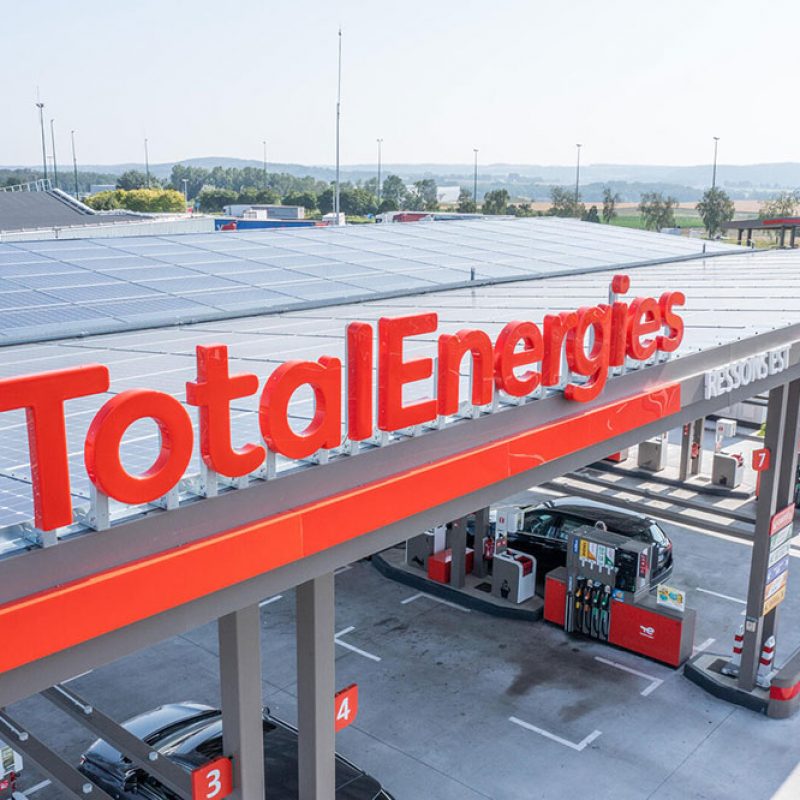
Through building PV systems on our own industrial plants and service stations that are subjected to the most strict fire safety measures, we bring the same fire prevention standards to our customer’s facilities.
By conducting proper installation and regular maintenance of the solar systems with certified material, we prevent any potential fire threat. This care extends towards the selection of the PV modules, connectors, DC cables, junction boxes and metallic parts. All these equipment come with the highest fire prevention certificates and are installed in accordance with industry-leading fire prevention practices.
TotalEnergies ENEOS follows stringent HSE standards based on its own global safety policies, local regulations and international norms for electrical and fire safety, designing commercial solar systems to meet or exceed national codes, utility requirements and recognised industry best practices.
Equipment testing ensures long-term safety and performance by subjecting solar panels, cables, connectors and junction boxes to fire rating tests, salt mist and corrosion tests, mechanical loading, weather and ageing tests, so only components proven to withstand real operating conditions are deployed on customer sites.
Fire prevention measures in commercial solar installations include the use of certified fire-safe PV modules and DC components, correct cable sizing and routing, protected junction boxes, proper overcurrent and surge protection, and installation methods aligned with strict fire-prevention standards used in TotalEnergies’ own industrial facilities.
TotalEnergies ENEOS ensures safe installation and on-site worker protection through rigorous contractor selection, mandatory HSE training, use of lifelines and fall protection, defined access paths and walkways on roofs, method statements and permits to work, and daily supervision by experienced site engineers.
Maintenance practices that help prevent performance loss or electrical risks include regular visual inspections, scheduled cleaning of modules, tightening and testing of electrical connections, thermographic scans to detect hot spots, performance monitoring against expected output and prompt corrective actions if anomalies are found.
Compliance with local and international electrical and fire codes is ensured by designing every solar power system to align with national standards, international IEC and NEC-type guidelines where applicable, utility interconnection rules and internal HSE checklists that are verified during design review, installation and commissioning.
Materials and components are selected for safety by prioritising PV modules, DC cables, connectors, junction boxes and mounting structures that carry recognised certifications, high fire ratings and proven track records in industrial environments, reducing the likelihood of overheating, arcing or mechanical failure.
Potential risks on roofs and industrial sites are assessed before installing solar panels through structural checks, load and wind assessments, review of roof condition, evaluation of access and evacuation routes, identification of existing services and hazards, and integration of these findings into the final system design.
24/7 monitoring helps detect safety or performance issues in a solar power system by continuously tracking generation, inverter alarms and string-level data, allowing the operations team to spot abnormal patterns, isolate affected components and dispatch maintenance teams quickly before minor issues become major faults.
In the event of a safety incident or system fault, a business can expect TotalEnergies ENEOS to follow a defined emergency response plan: safely isolate the affected part of the solar installation, investigate root causes, perform corrective repairs or replacements, document findings and update procedures to prevent recurrence.